
The Venture Mind Index™ (VMI™) is a cutting-edge tool developed to evaluate the mental traits and mindset essential for a founder’s success. The VMI™ builds on our experience and learnings building our flagship assessment, TeamPrint™, and provides even more data and insight into the mindset and potential edge for certain founders.
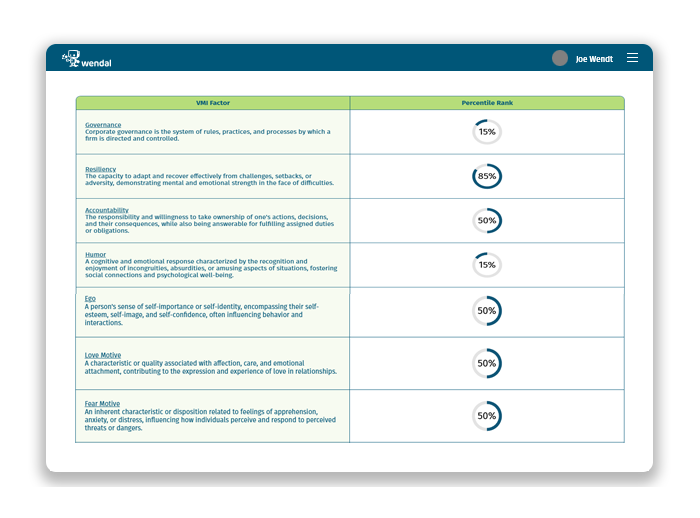
The assessment comprises 25 targeted questions that evaluate 12 key psychometric factors, including:
By leveraging artificial intelligence and machine learning, the VMI™ delivers an objective, data-driven perspective on entrepreneurial potential, giving you insights into a founder’s capacity to thrive under pressure.
The VMI™ generates two primary scores:
Together, these metrics offer a comprehensive picture of a founder’s strengths and potential challenges, facilitating informed decision-making.


The VMI™ stands on the foundation of validated psychometric assessments and insights from studies in leadership and sports psychology. Its development process includes:
This robust methodology ensures that the VMI™ is both reliable and predictive, making it an invaluable tool for evaluating entrepreneurial aptitude.
While the full spectrum of 12 factors provides extensive insights, many applications may only require a subset of these metrics to streamline evaluation processes. For instance, if a role demands exceptional resiliency and confidence, those scores can be prioritized. In addition, test administrators might consider tailored studies to determine the optimal weighting of factors based on specific organizational needs.
For further guidance on integrating the VMI™ into your investment or hiring processes, please contact us for a customized consultation.
We use our own and third-party cookies to improve our product and to show you more relevant content based on your browsing history. Please accept our cookie settings or update them based on your preferences. Here is our cookie policy.
Analytics consent settings allow visitors to choose whether their data can be collected for tracking and analysis purposes. They typically give users control over enabling or disabling analytics cookies and tools that measure website performance and user behavior.
Preferences settings let visitors customize their website experience by choosing options such as language, region, or display preferences. These settings help ensure the site remembers user choices and provides a more personalized experience.
Marketing preferences settings allow visitors to control whether their data can be used for targeted advertising and promotional communications. They give users the choice to enable or disable personalized marketing based on their interests and online behavior.
Necessary preferences are essential settings that enable the core functionality of a website, such as security, network management, and accessibility. These cannot be disabled because they ensure the site operates properly and delivers a basic, reliable user experience.