
Workplace civility is behavior that helps to establish norms for mutual respect at work. It comprises behaviors that are fundamental to positively connecting with one another by building relationships and empathizing with others.

Workplace civility comprises behaviors that are fundamental to positively connecting with one another by building relationships and empathizing with others. A civil work environment can improve teams’ productivity, collaboration, and appreciation of diversity so less time is devoted to dealing with interpersonal conflicts.
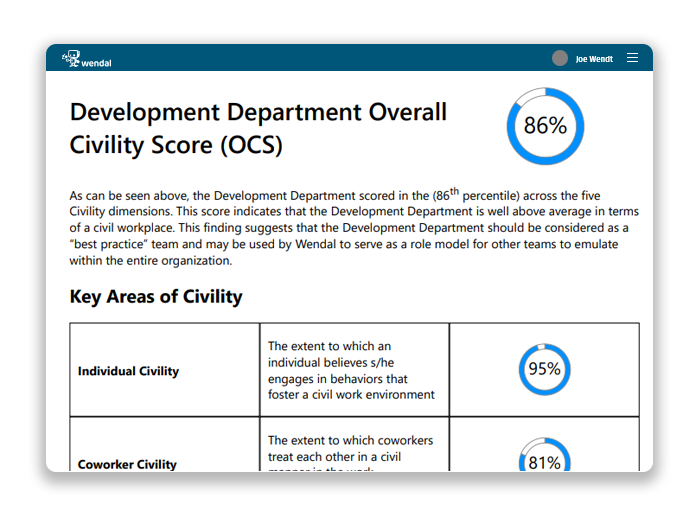
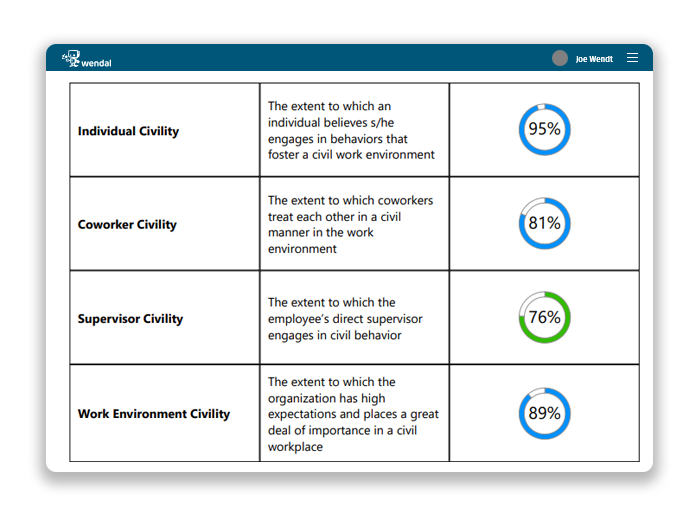
We’ve developed and validated our own assessment of civility, the Multi-factor Assessment of Civility© (MAC). Unlike the other measures, the MAC has 5 different dimensions so you can pinpoint exactly where high and low civility exists in the following areas:
Once we’ve identified areas of low and high civility, we design customized interventions to address uncivil behavior. By facilitating training within workgroups, they become empowered to establish new civil norms, model desired behaviors, and confidently address potential future violations. Additional, more focused steps, may also include:
With these sustainable changes in place, everyone can feel respected and valued at work so you can focus your time on what you do best.
We use our own and third-party cookies to improve our product and to show you more relevant content based on your browsing history. Please accept our cookie settings or update them based on your preferences. Here is our cookie policy.
Analytics consent settings allow visitors to choose whether their data can be collected for tracking and analysis purposes. They typically give users control over enabling or disabling analytics cookies and tools that measure website performance and user behavior.
Preferences settings let visitors customize their website experience by choosing options such as language, region, or display preferences. These settings help ensure the site remembers user choices and provides a more personalized experience.
Marketing preferences settings allow visitors to control whether their data can be used for targeted advertising and promotional communications. They give users the choice to enable or disable personalized marketing based on their interests and online behavior.
Necessary preferences are essential settings that enable the core functionality of a website, such as security, network management, and accessibility. These cannot be disabled because they ensure the site operates properly and delivers a basic, reliable user experience.